

In Greek homes, melomakarona are not simply Christmas cookies. They are a seasonal ritual, one that signals the true beginning of the holidays. The secret lies not in complexity, but in balance: citrus and spice, crispness and softness, patience and care. As ovens warm and syrup cools, kitchens fill with familiar aromas that bring families together year after year.
In this guide, you will learn how Greek families have made melomakarona for decades. From understanding why tiny surface grooves matter, to mastering syrup absorption without heaviness, each step reflects the quiet wisdom of Mediterranean holiday baking. Whether you are continuing a family tradition or discovering it for the first time, this recipe invites you to slow down and experience Christmas the Greek way.
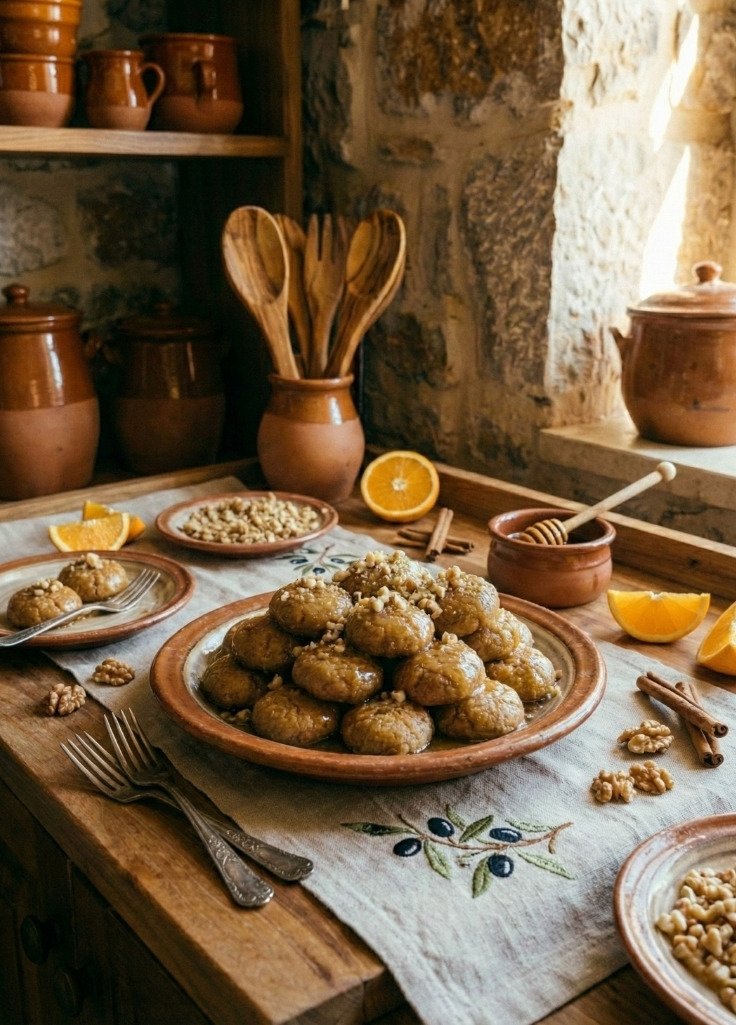
Ingredients for Traditional Greek Melomakarona
This recipe makes approximately thirty to thirty five cookies.
For the syrup (make first)
> Two cups water
> One cinnamon stick
> One whole clove
> One orange cut in half, plus a strip of peel
> Half a cup honey
For the dough
> Four cups all-purpose flour
> One cup fine semolina
> One and a half cups fresh orange juice
> Three quarters cup extra virgin olive oil
> One quarter cup powdered sugar
> One teaspoon cinnamon
> Half teaspoon ground clove
> One teaspoon baking soda
> Zest from one orange
For finishing
> Greek Honey
> Finely chopped walnuts
> Optional cinnamon
Tip: The balance between olive oil and sunflower oil keeps the cookies aromatic but light, never heavy.
Step-by-Step Recipe
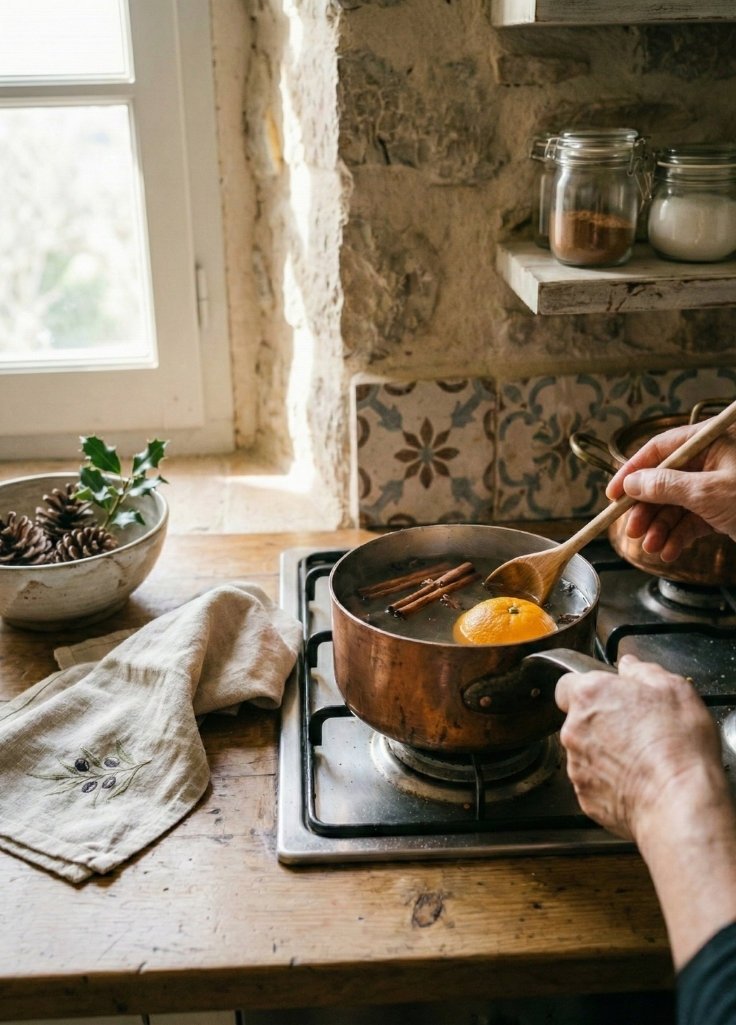
1. Prepare the Syrup First
In a small pot, combine the water, sugar, honey, cinnamon stick, clove, and orange. Bring to a gentle boil and simmer briefly until the sugar dissolves completely. Remove from heat, and set aside to cool fully.
This step is essential. Melomakarona must always be dipped hot into cold syrup.
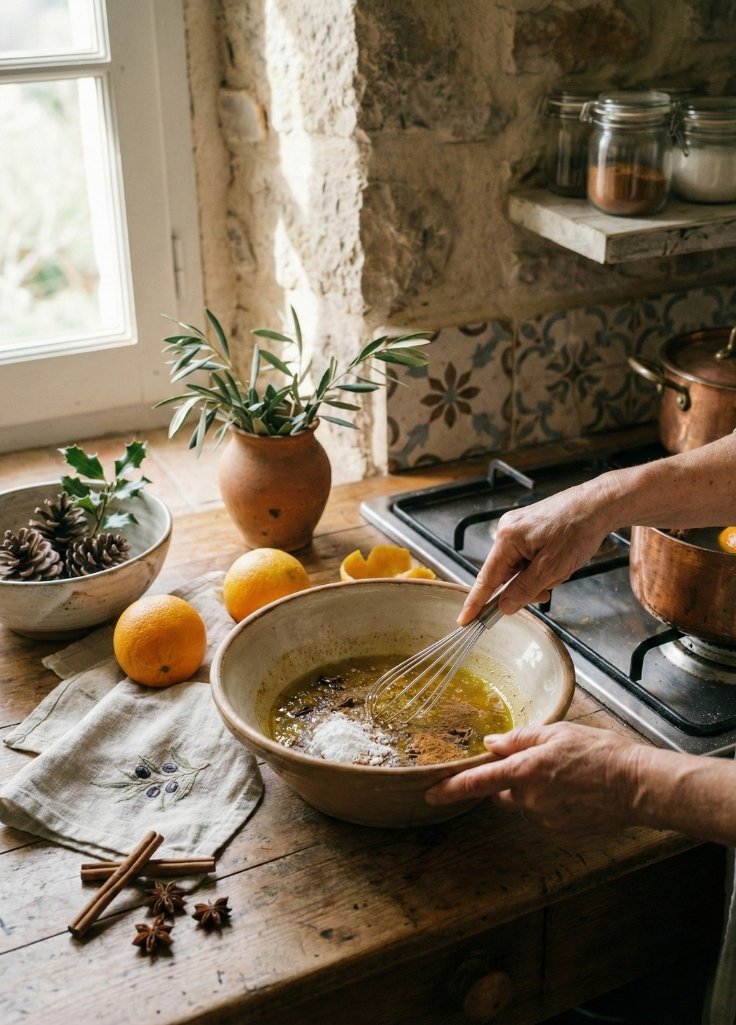
2. Mix the Dough
In a large bowl, whisk together the orange juice, sunflower oil, olive oil, powdered sugar, spices, baking soda, and orange zest until smooth and fragrant.
In a separate bowl, combine the flour and semolina. Gradually add the wet mixture to the dry ingredients, stirring gently with a spoon or spatula. Stop mixing as soon as the dough comes together. The dough should be soft and slightly oily.
Avoid kneading. Overworking the dough leads to dense cookies.
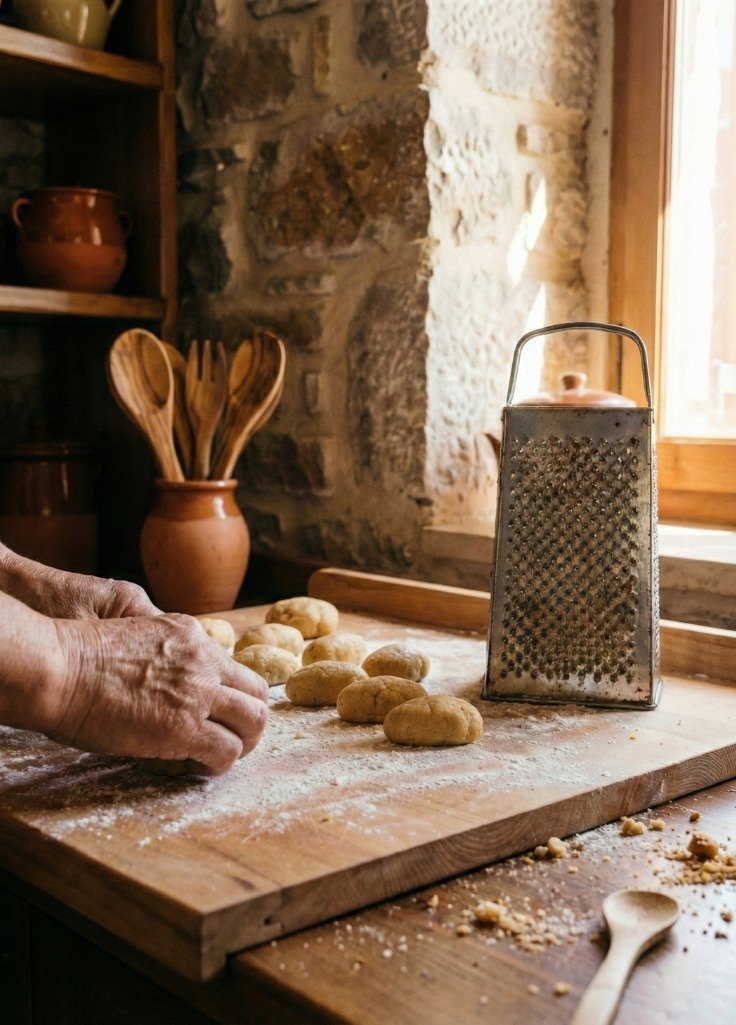
3. Shape with Care
Take small portions of dough, about twenty to thirty grams each, and shape them into small ovals.
For the traditional texture, lightly press each cookie against a cheese grater or fork to create shallow grooves. These small ridges help the syrup soak in evenly later.
4. Bake Until Golden
Preheat the oven to one hundred ninety degrees Celsius or three hundred seventy five degrees Fahrenheit.
Place the cookies on a lined baking tray and bake for twenty to twenty five minutes, until lightly golden and crisp around the edges.
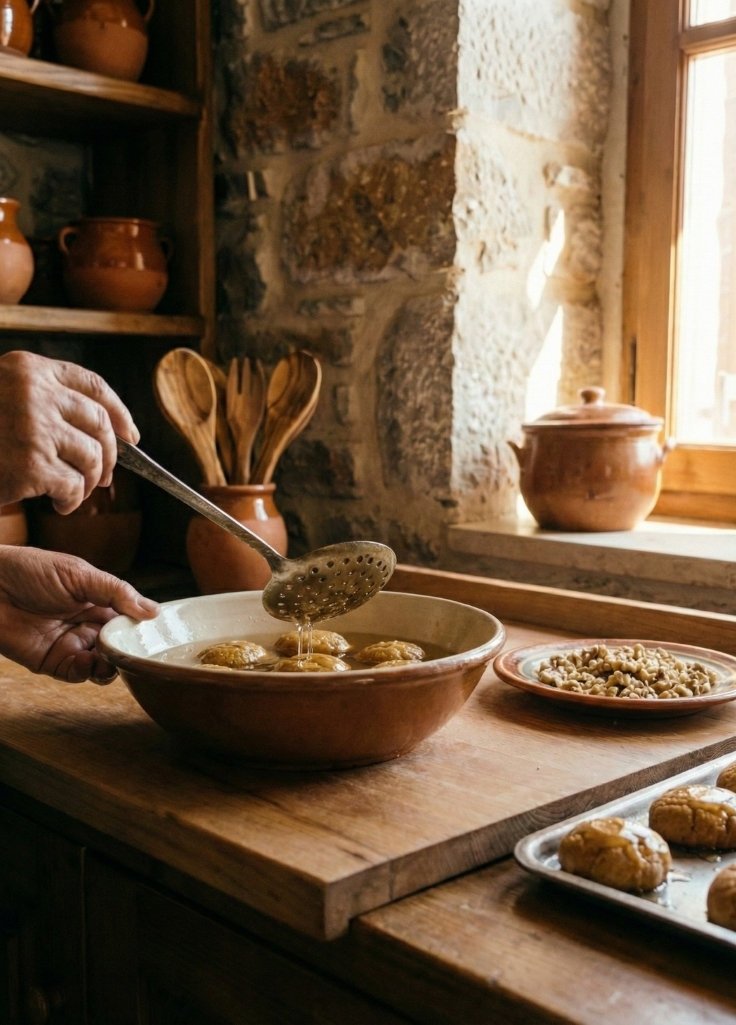
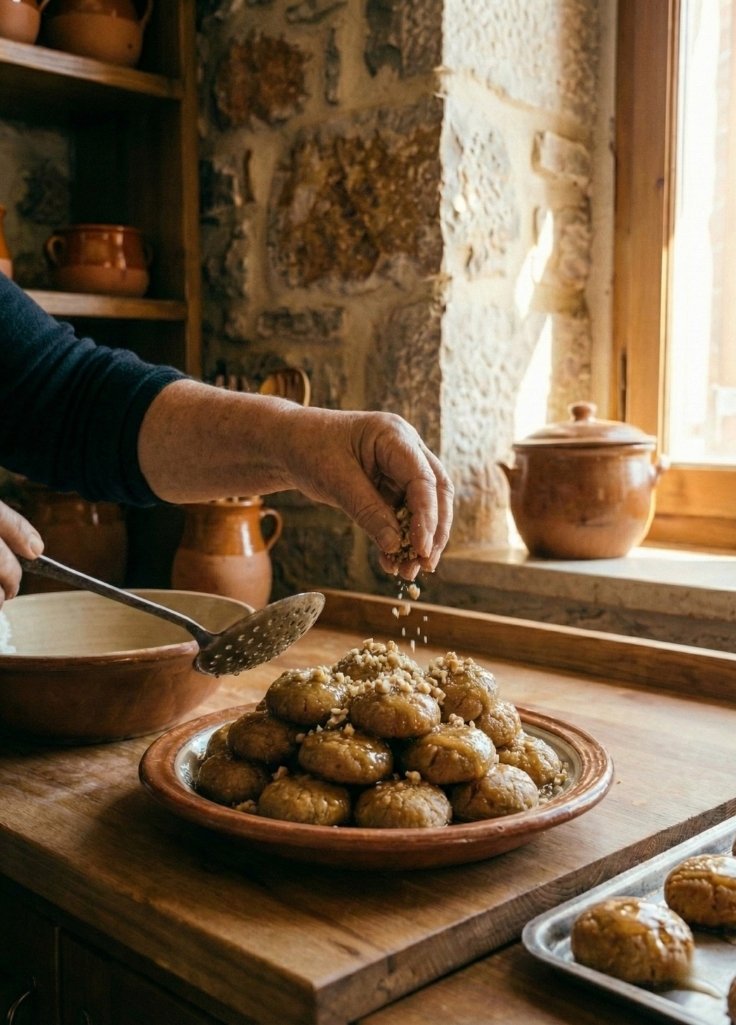
5. Syrup the Cookies
While still hot from the oven, dip the cookies into the cold syrup for ten to twelve seconds. Remove and place on a tray.
Finish by drizzling with honey and sprinkling with chopped walnuts. Add a light dusting of cinnamon if desired.
A Holiday Tradition at the Table
Melomakarona are meant to be shared. In many Greek homes, they appear on the table days before Christmas and remain well into the New Year. Their flavor improves over time as the syrup settles into the crumb.
Served with coffee, tea, or simply on their own, they carry memories of family gatherings, laughter in the kitchen, and hands sticky with honey.
Frequently Asked Questions
The textured surface helps the syrup absorb evenly, creating a moist interior without sogginess.
Yes. Melomakarona taste even better after one or two days and keep well for up to one week.
Yes. Olive oil gives aroma and depth that defines authentic Greek melomakarona.
Absolutely. Some families add nutmeg or allspice, depending on regional tradition.