

Greek weddings are filled with joy, symbolism, and rituals that bring families and communities together.
These traditions have been passed down for generations and continue to make each celebration feel timeless and uniquely Greek.
From the first steps of preparation to the final dance of the evening, every moment carries meaning.
Let us explore some of the most beloved customs that still take place across villages and cities in Greece today.
The Couple’s Bed Is Made with Love
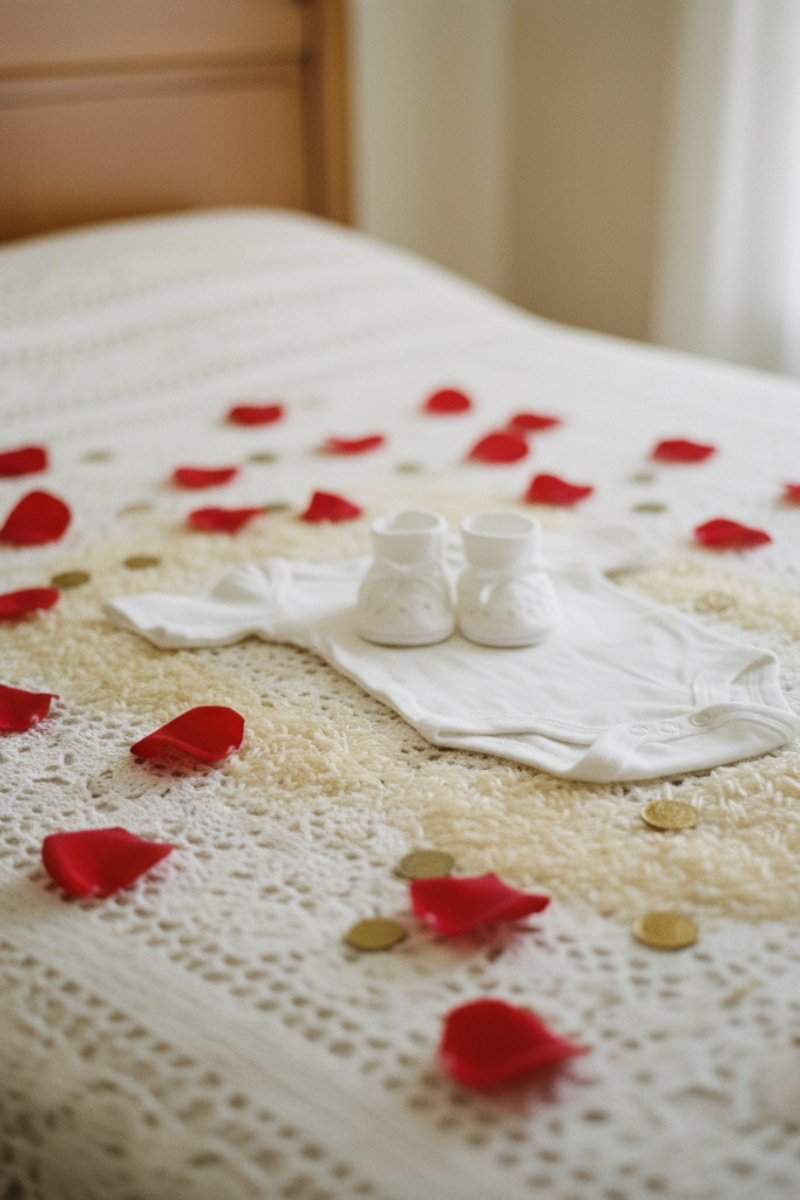
A few days before the ceremony, family and close friends gather to prepare the couple’s bed. This usually happens on a Thursday and involves traditional music, singing, and blessings.
Rose petals, gold coins, baby clothes, and even rice are placed on the bed as symbols of fertility, good luck, and abundance. It is a joyful event that marks the beginning of a shared life
In many regions, the maid of honor (koumbara) stands by holding a jar filled with rice and rose petals at the entrance of the couple’s bedroom; guests take turns grabbing a handful to scatter over the sheets, tossing money alongside the mixture to wish the couple prosperity.
The Bride Is Kept from the Groom’s Sight
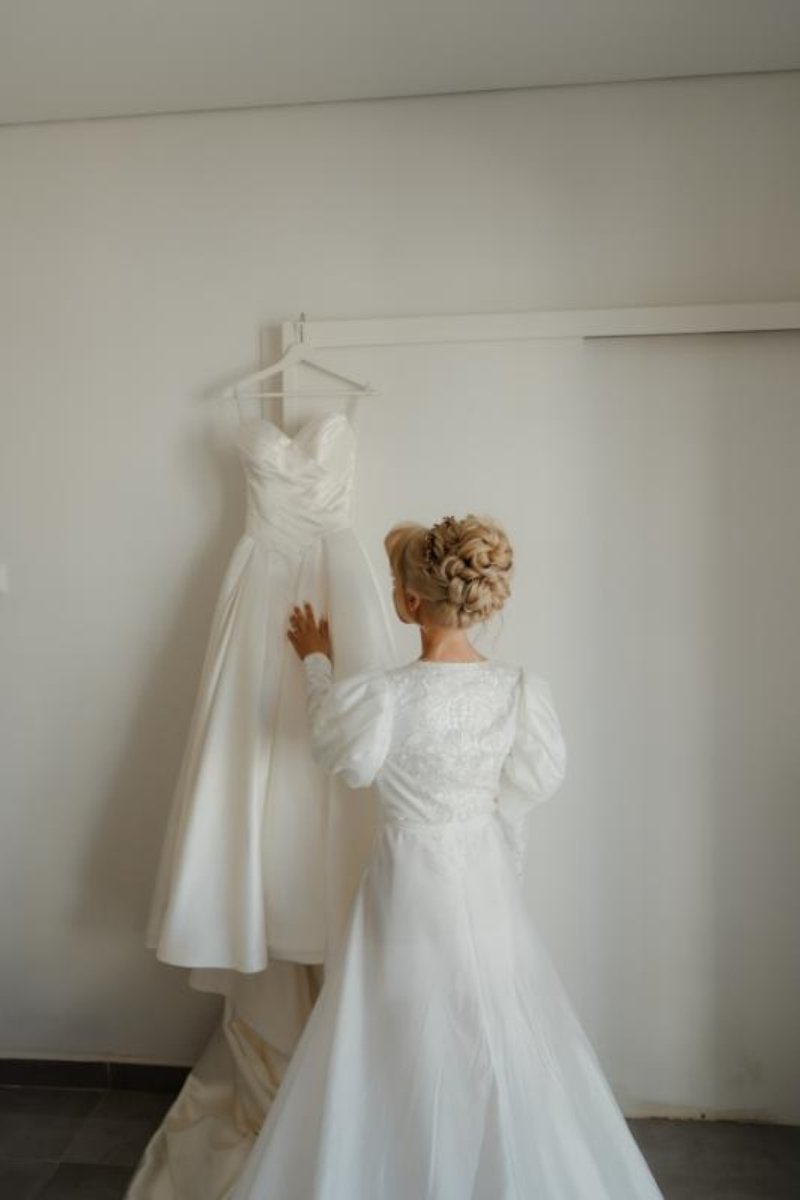
Traditionally, the groom would not see the bride until the very moment she entered the church. This added a sense of mystery and heightened emotion. The anticipation built among guests, and the groom would stand waiting with flowers, often surrounded by friends and musicians. The reveal was a powerful and emotional moment

The Groom Is Prepared with Care
On the wedding day, the groom is traditionally shaved by his best man. This is not just about appearance. It is a meaningful act of trust and transformation as he prepares for a new chapter.
Music often plays in the background, and the atmosphere is filled with excitement and laughter.
The Dowry Was a Symbol of Care
In many Greek villages, including parts of Lesvos, Chios, Santorini, Crete and many more, the bride’s family used to prepare a dowry called prika. This collection of handmade linens, embroideries, and household items was often displayed in the days before the wedding.
The dowry reflected the care, skill, and love of the bride’s family, and it marked her readiness to create a new home. Though no longer common, the tradition is still remembered and honored in many families.
Rice and Koufeta: Blessings in Two Forms
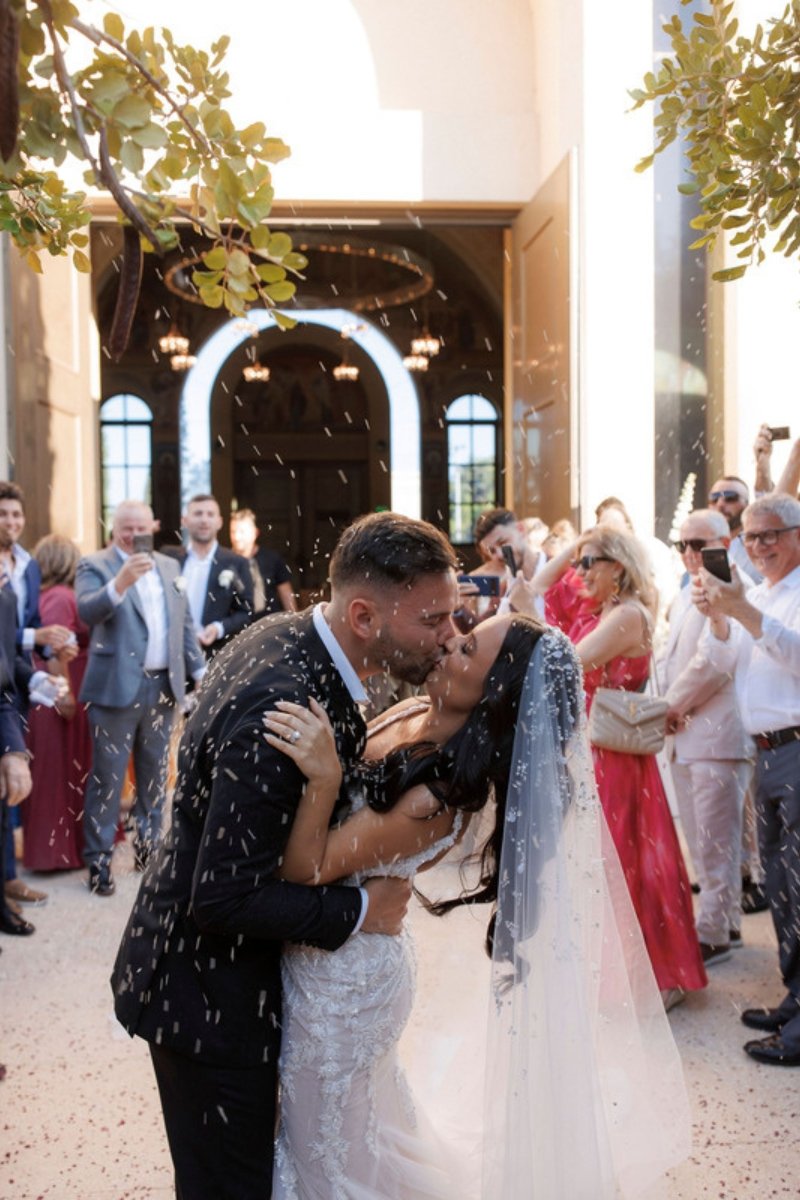
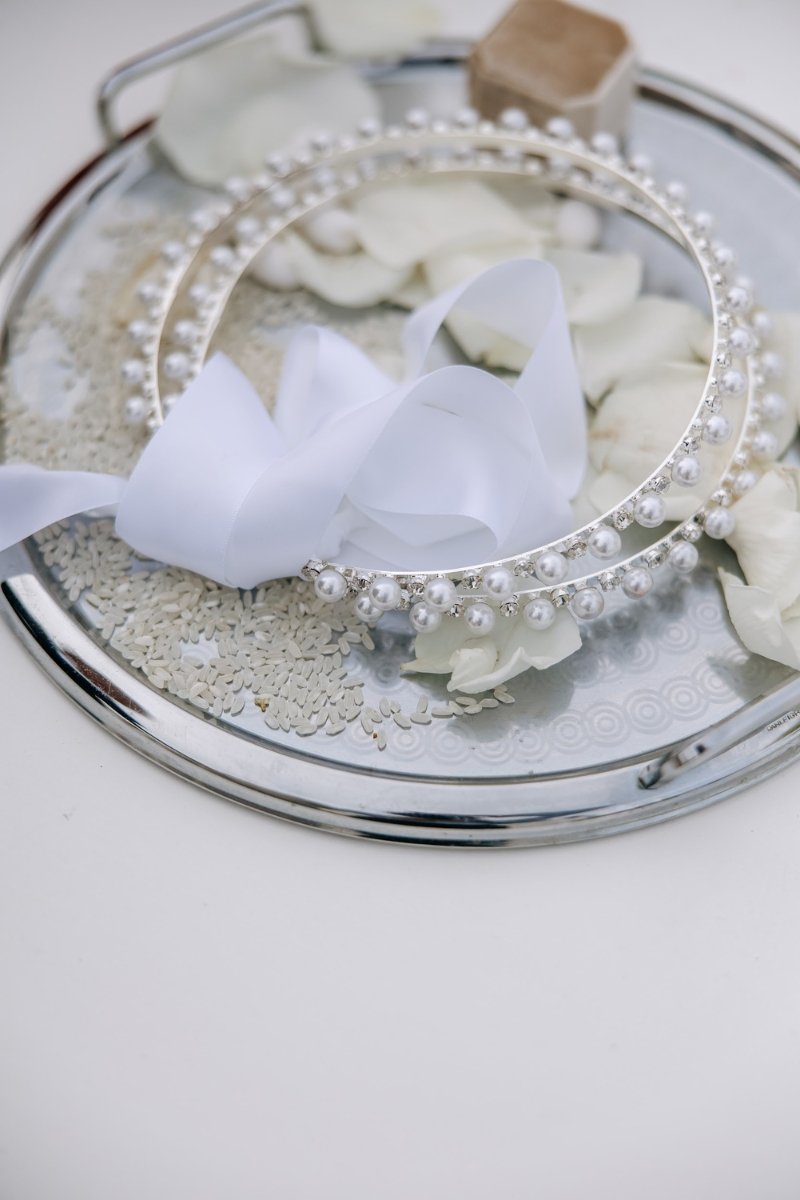
Rice‑Throwing Tradition: After the ceremony, guests shower the couple with rice or wheat kernels. This custom represents unity, fertility, and a shared future built on strong roots.
Koufeta (Sugared Almonds): Guests receive almond sweets in odd numbers (typically five). The almond’s bittersweet flavor echoes life’s highs and lows. In Santorini some weddings serve honey‑dipped koufeta, linking the sweetness of island honey to the marriage celebration.
On the island of Chios guests may sip soumada, a white almond drink symbolizing purity and joy.
The Names on the Bride’s Shoes
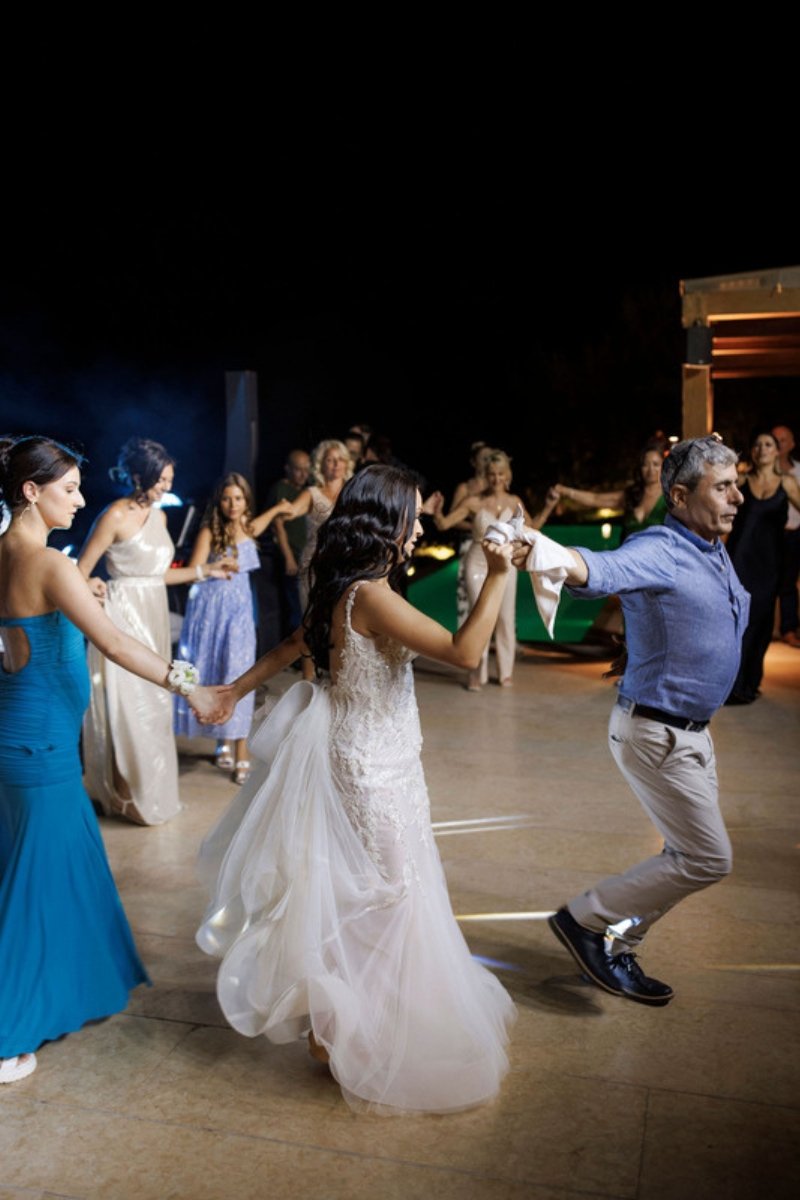
Before putting on her wedding shoes, the bride writes the names of her unmarried friends on the soles. By the end of the night, the names that have faded are believed to belong to those who will soon be married.
It is a fun and heartfelt tradition that friends look forward to.
The Groom Waits at the Church
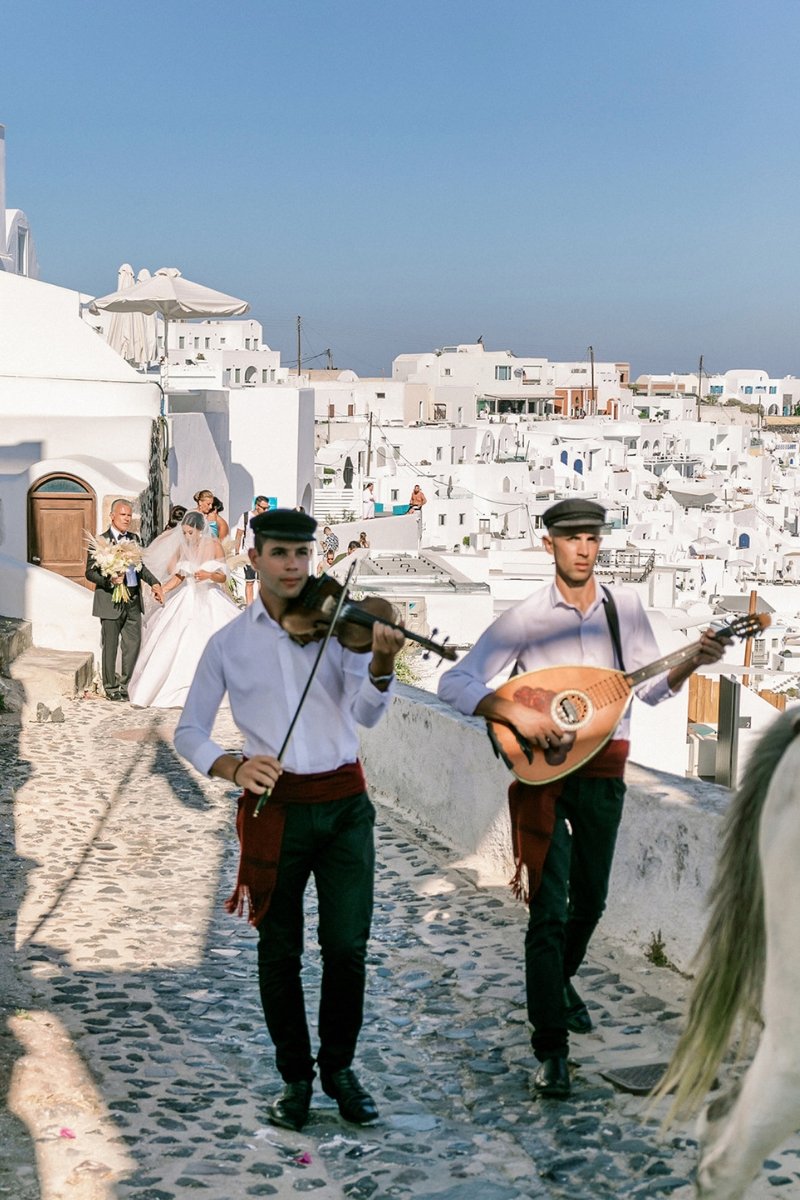
It is common for the groom to wait outside the church with the flower bouquet in hand as he watches for the bride’s arrival.
This moment is full of anticipation and emotion, often accompanied by traditional music and the smiles of gathered guests.
Dance, Music and Regional Celebrations
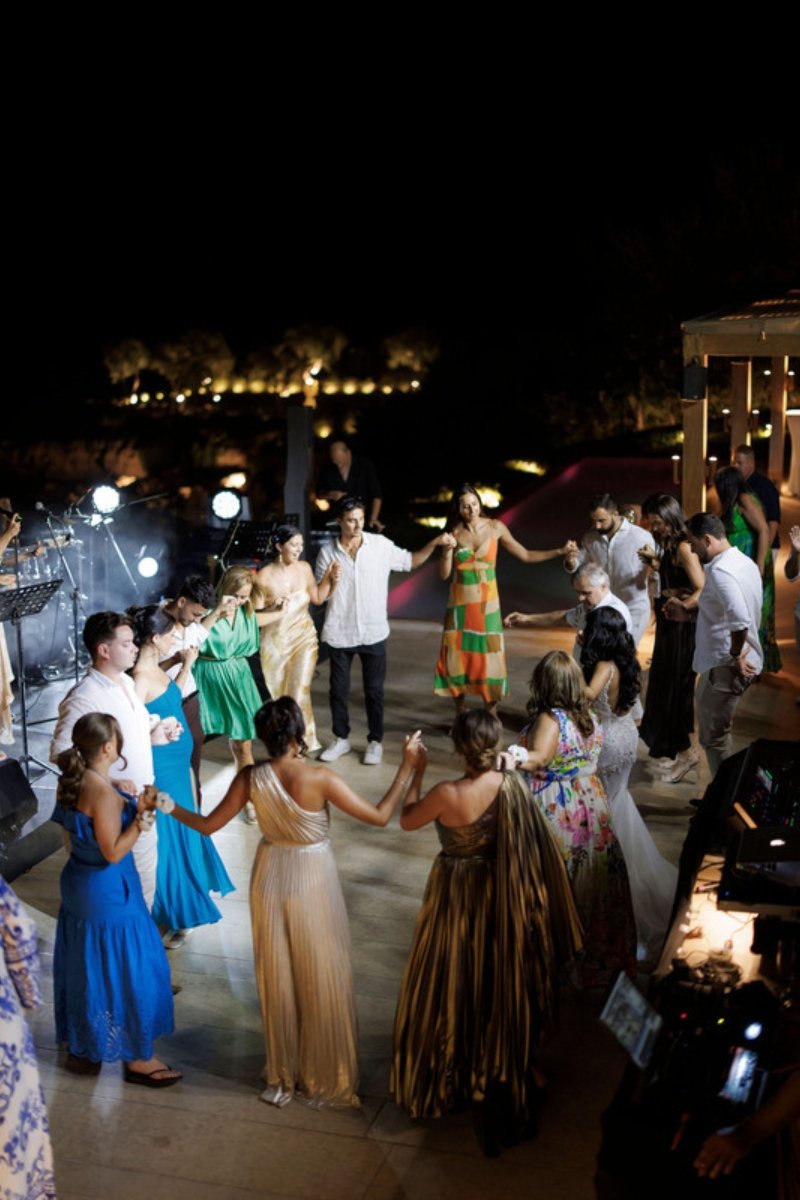
After dinner the air fills with music and dance. Each region has its own dance type and meaning:
Kalamatianos (Peloponnese): A lively circle dance symbolizing unity and shared rhythm.
Syrtos (Islands): A graceful line dance that winds through guests and friends.
Ikariotikos (Ikaria): High energy and fast tempo, reflecting the island’s free spirit.
Pentozali (Crete): A spirited dance with bold movements and proud tradition.
These dances are not merely entertainment. They are expressions of identity, heritage, and community life.
Breaking Plates in Celebration
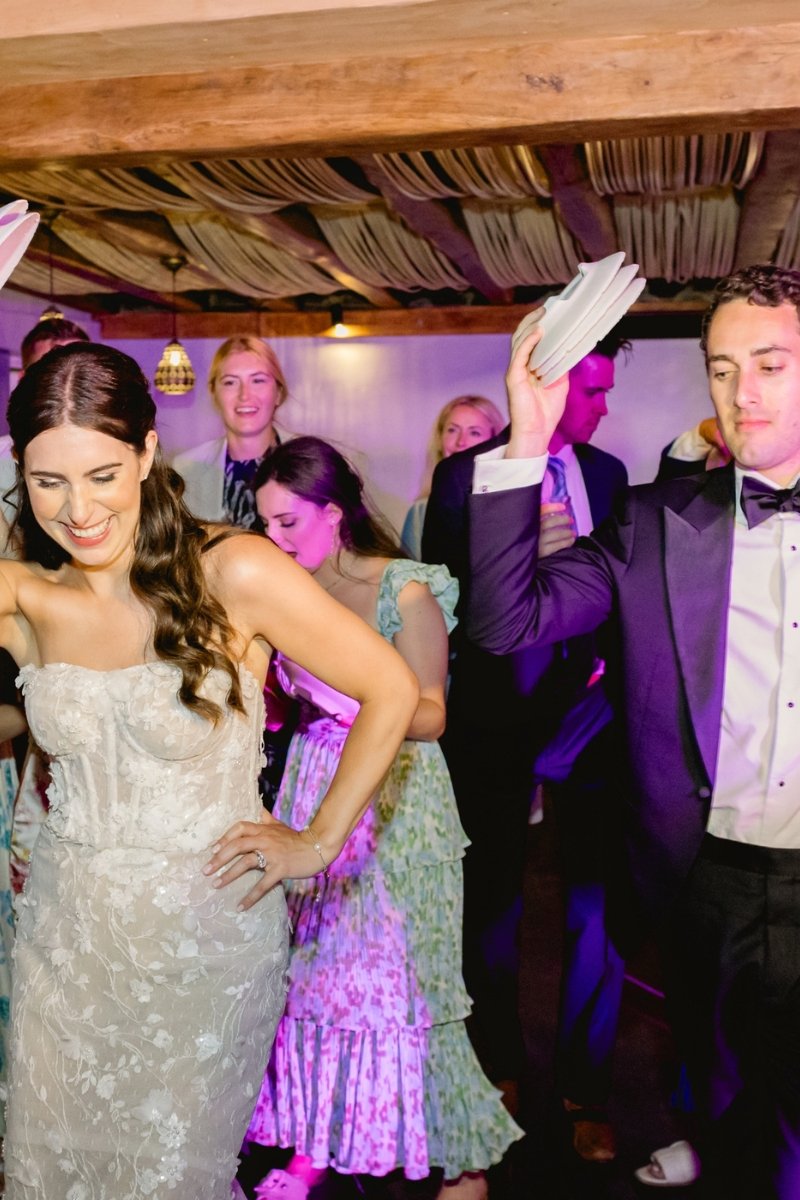
Breaking plates used to be a way to express happiness and release energy.
It symbolizes the end of the old life and the beginning of the new. Whether done formally or just remembered fondly, the tradition still brings smiles and laughter.
A Celebration of Love, Family, and Tradition
Greek weddings are more than a ceremony. They are a celebration of roots, relationships, and the beauty of life shared. Whether it is the sound of dancing steps, the sweetness of koufeta, or the moment the bride arrives, every part of the day reflects a culture that values love, community, and joy.
Want to explore more about destination weddings in Greece and top locations? Dive into our Destination Wedding page.